Tuesday, July 3, 2018
Did the Prophet Muhammad try to commit suicide? By Ehteshaam Gulam
According to Ibn Ishaq Page 106, Al-Tabari Volume 6, Pages 67-68 and Sahih Bukhari Hadith #6467 the Prophet Muhammad tried to commit suicide. However is this story really true? Is it reliably transmitted? Muslim Apologist gives reasons why the so called sucidie attempts of the Prophet Muhahttps://www.youtube.com/watch?v=zesRa9kMFOsmmad are from weak sources and why not of them have reliable chains of transmissions or isnads.

Episode 11 Ehteshaam Gulam Dr. Richard Carrier and Dr. Robert M Price Interview
Episode 11 Ehteshaam Gulam Dr. Richard Carrier and Dr. Robert M Price Interview
In the penultimate episode Muslim Apologist Ehteshaam Gulam teams up with world reowned Biblical Scholars Dr. Richard Carrier and Dr. Robert M Price to Answer Christians and to do what his website says Answer Christian Claims. This Interview was filmed in front of a live audience.
Metaphors in the Bible, Quran and Hadith
Metaphors in the Bible, Quran and Hadith
See Quran 3:7, Muslim Hadith #6126, 6128 and Bukhari #7013. For metaphors in the Bible see here: https://literarydevices.net/15-famous-metaphors-in-the-bible/
According to Ibn Ishaq Page 106, Al-Tabari Volume 6, Pages 67-68 and Sahih Bukhari Hadith #6467 the Prophet Muhammad tried to commit suicide. However is this story really true? Is it reliably transmitted? Muslim Apologist gives reasons why the so called sucidie attempts of the Prophet Muhammad are from weak sources and why not of them have reliable chains of transmissions or isnads.
See Quran 3:7, Muslim Hadith #6126, 6128 and Bukhari #7013. For metaphors in the Bible see here: https://literarydevices.net/15-famous-metaphors-in-the-bible/
According to Ibn Ishaq Page 106, Al-Tabari Volume 6, Pages 67-68 and Sahih Bukhari Hadith #6467 the Prophet Muhammad tried to commit suicide. However is this story really true? Is it reliably transmitted? Muslim Apologist gives reasons why the so called sucidie attempts of the Prophet Muhammad are from weak sources and why not of them have reliable chains of transmissions or isnads.
Abdullah ibn Sa`d Ibn Abi Sarh and the Quran
The story of Abdullah ibn Sa`d Ibn Abi Sarh is weak because its found in weak sources of Islam. See below, they come from Ibn Ishaq, Ibn Sad and Tafsirs and Al-Sira Iraqi. All these sources are weak, Muslim scholars don't accept them:
Shaykh ibn Taymiyyah said:
Allah has provided evidence (i.e. Isnad) establishing the authenticity or lack thereof of the narrations that are necessary in matters of the religion. It is well known that most of what was reported in aspects of Tafsir (commentaries on the Qur'an) is similar to narrations reporting Maghazi (or Seerah) and battles, promoting Imam Ahmad to state that three matters do not have Isnad: Tafsir, Mala'him (i.e. great battles), and Maghazi. This is because most of their narrations are of the Maraseel (plural for Mursal) type, such as narrations reported by Urwah Ibn az-Zubair, ash-Sha'bi, az-Zuhri, Musa Ibn Uqbah and Ibn Ishaq." (Shaykh Ibn Taymiyyah, Majmu' Al Fataawa, Volume, 13, page 345)
PRESENTATION OF ISLAMIC SOURCES
#1 SIRAT RASUL ALLAH
Quoting from "The Life of Muhammad", A Guillaume's a translation of Ibn Hisham's "Sirat Rasul Allah", from page 550: [words in brackets [ ] are mine]
The apostle had instructed his commanders when they entered Mecca only to fight those who resisted them except a small number who were to be killed even if they were found beneath the curtains of the Ka`ba. Among them was `Abdullah b. Sa`d, brother of the B. `Amir b. Lu'ayy. The reason he ordered him to be killed was that he had been a Muslim and used to write down revelation; then he apostatized and returned to Qurahysh [Mecca] and fled to `Uthman b. `Affan whose foster brother he was. [`Uthman was one of Muhammad's closest friends, and later became the Caliph of Islam]. The latter hid him until he brought him to the apostle after the situation in Mecca was tranquil, and asked that he might be granted immunity. They allege that the apostle remained silent for a long time till finally he said yes, [granting `Abdullah immunity from the execution order]. When `Uthman had left he [Muhammad] said to his companions who were sitting around him, "I kept silent so that one of you might get up and strike off his head!" One of the Ansar [Muhammad's helpers from Medina] said, then why didn't you give me a sign, O apostle of God?" He [Muhammad] answered that a prophet does not kill by pointing.
NOTE: the Sirat Rasul Allah is the earliest and most authentic biography of Muhammad. It was even written before the Hadith were compiled.
#2 KITAB AL-TABAQAT AL-KABIR
[Note: words in [ ] brackets are mine]. I have also added ( ) brackets to associate numbers with the people in the list.
Muhammad ordered the execution of 10 people when he took Mecca. Here is the list of names found in Ibn Sa`d "Tabaqat", Vol 2, page 168.
The apostle of Allah entered through Adhakhir, [into Mecca], and prohibited fighting. He ordered six men and four women to be killed, they were (1) Ikrimah Ibn Abi Jahl, (2) Habbar Ibn al-Aswad, (3) Abd Allah Ibn Sa`d Ibn Abi Sarh, (4) Miqyas Ibn Sababah al-Laythi, (5) al-Huwayrith Ibn Nuqaydh, (6) Abd Abbah Ibn Hilal Ibn Khatal al-Adrami, (7) Hind Bint Utbah, (8) Sarah, the mawlat (enfranchised girl) of Amr Ibn Hashim, (9) Fartana and (10) Qaribah.
Occasionally, the Sirat, and the Tabaqat use a different name for the same person. #3 in the list given above is such a case. The differences in the name is due to the amount of family lineage given for the man's name, and the english translation.
Ibn Sa`d corroborates Ibn Ishaq and says on page 174:
A person of al-Ansar had taken a vow to kill Ibn Abi Sarh [the already mentioned Abdallah] if he saw him. `Uthman whose foster brother he (Ibn Abi Sarh) was, came and interceded for him with the prophet. The Ansari was waiting for the signal of the prophet to kill him. `Uthman interceded and he [Muhammad] let him go. The the apostle of Allah said to the Ansari, "Why did you not fulfil your vow?" He said, "O apostle of Allah! I had my hand on the hilt of the sword waiting for your signal to kill him." The prophet said signalling would have been a breach of faith. "It does not behave the prophet to make signal."
NOTE ON THE TABAQAT:
The Tabaqat was translated into English by Moinul Haq, a Pakistani. His work was published by the Pakistan Historical Society. It is published in English in two volumes. The title means "Book of the Major Classes". It is basically a biography of Muhammad.
#3 From Al-Sira by al-'Iraqi
The scribes of Muhammad were 42 in number. `Abdallah Ibn Sarh al-`Amiri was one of them, and he was the first Quraishite among those who wrote in Mecca before he turned away from Islam. He started saying, "I used to direct Muhammad wherever I willed. He would dictate to me 'Most High, All-Wise', and I would write down 'All-Wise' only. Then he would say, 'Yes it is all the same'. On a certain occasion he said, 'Write such and such', but I wrote 'Write' only, and he said, 'Write whatever you like.'" So when this scribe exposed Muhammad, he wrote in the Qur'an, "And who does greater evil than he who forges against God a lie, or says, 'To me it has been revealed', when naught has been revealed to him." So on the day Muhammad conquered Mecca, he commanded his scribe to be killed. But the scribe fled to `Uthman Ibn `Affan, because `Uthman was his foster brother (his mother suckled `Uthman). `Uthman, therefore, kept him away from Muhammad. After the people calmed down, `Uthman brought the scribe to Muhammad and sought protection for him. Muhammad kept silent for a long time, after which he said yes. When `Uthman had left, Muhammad said "I only kept silent so that you (the people) should kill him."
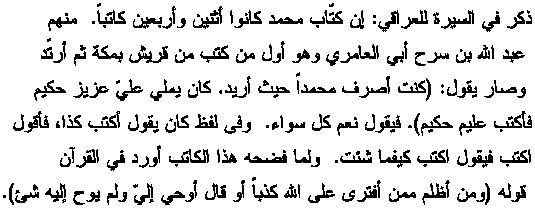
The above quotation in both English and Arabic is from the respective edition of Is the Qur'an Infallible? by `Abdallah `Abd al-Fadi, Order Number VB 4009 E, Light of Life, P.O. Box 13, A-9503 Villach, Austria. The book is availabe in English, and the original Arabic edition.
Al-Iraqi refers to Sura 6:93 above. From Dawud's translation Sura 6:93 reads:
Who is more wicked than the man who invents a falsehood about God, or says: "This was revealed to me", when nothing was revealed to him? Or the man who says, "I can reveal the like of what God has revealed"?
#4 Al-Baidawi commenting on the Qur'an, Sura al-An`am 6:93
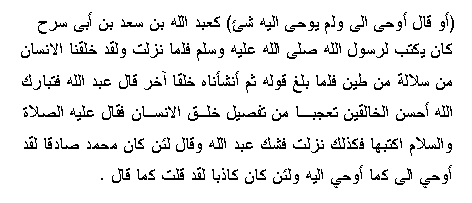
"'To me it has been revealed', when naught has been revealed to him" refers to `Abdallah Ibn Sa`d Ibn Abi Sarh, who used to write for God's messenger. The verse (23:12) that says, "We created man of an extraction of clay" was revealed, and when Muhammad reached the part that says, "... thereafter We produced him as another creature (23:14), `Abdallah said, "So blessed be God the fairest of creators!" in amazement at the details of man's creation. The prophet said, "Write it down; for thus it has been revealed." `Abdallah doubted and said, "If Muhammad is truthful then I receive the revelation as much as he does, and if he is a liar, what I said is a good as what he said."
Quoted from the famous Tafsir Anwar al-Tanzil wa Asrar al-Ta'wil by `Abdallah Ibn `Umar al-Baidawi.
Monday, June 18, 2018
Chronological Order of the Prophet Muhammad's wives By Ehteshaam Gulam
For Chronoligcal Order of the Prophet Muhammad's wives
For the refences putting the Prophet Muhammad's wives in chronological order see:
Al-Tabari Volume 9, pages 127-128, Al-Tabari Volume 39, pages 3-4, Al-Tabari Volime 9, page 128-130, Volume 9, Page 134, Al-Tabari Volume 39, Pages 182-184.
For the refences putting the Prophet Muhammad's wives in chronological order see:
Al-Tabari Volume 9, pages 127-128, Al-Tabari Volume 39, pages 3-4, Al-Tabari Volime 9, page 128-130, Volume 9, Page 134, Al-Tabari Volume 39, Pages 182-184.
Thursday, June 14, 2018
The real reason for Quran 66 By Ehteshaam Gulam
The story of Hafsa and Maria in Surat at-Tahreem
The Sources for the whole story is found in Al-Tabari Volume 9, Pages 137-141, Al-Tabari Volume 39, pages 193-195, Ibn Sad Volume 8, pages 148-151, Al Tabari Volume 39, page 165, Ibn Sad Volume 8, page 106, 154.
One of Answering Islams vile, perverted and unprofessional authors Silas writes:
Here is the reference. NOTE: Words in [ ] type brackets are mine In the "Kitab al-Tabaqat al-Kabir", mention is made of Mariyah. On page 151, it says "He [the Lord of Alexandria] presented to the prophet Mariyah, her sister Sirin, a donkey and a mule which was white....The apostle of Allah liked Mariyah who was of white complexion and curly hair and pretty.... Then he cohabited with Mariyah as a handmaid and sent her to his property which he had acquired from Banu al-Nadir." The note for the word "handmaid" says "Handmaids gained the status of wedded wives if they bore children. They were called "umm walad" and became free.
This story is also supported by Tabari's History, volume 39, page 194. Here is the quote: (my words are in ( ) parenthesis). "He (Muhammad) used to visit her (Mariyam) there and ordered her to veil herself, [but] he had intercourse with her by virtue of her being his property." The note (845) on this says, "That is, Mariyah was ordered to veil herself as did the Prophet's wives, but he did not marry her."
All these sources are weak, Muslim scholars don't accept them. As for the tafsirs, most of the time they don't have isnads as Ibn Taymiyyah said:
One of Answering Islams vile, perverted and unprofessional authors Silas writes:
Here is the reference. NOTE: Words in [ ] type brackets are mine In the "Kitab al-Tabaqat al-Kabir", mention is made of Mariyah. On page 151, it says "He [the Lord of Alexandria] presented to the prophet Mariyah, her sister Sirin, a donkey and a mule which was white....The apostle of Allah liked Mariyah who was of white complexion and curly hair and pretty.... Then he cohabited with Mariyah as a handmaid and sent her to his property which he had acquired from Banu al-Nadir." The note for the word "handmaid" says "Handmaids gained the status of wedded wives if they bore children. They were called "umm walad" and became free.
This story is also supported by Tabari's History, volume 39, page 194. Here is the quote: (my words are in ( ) parenthesis). "He (Muhammad) used to visit her (Mariyam) there and ordered her to veil herself, [but] he had intercourse with her by virtue of her being his property." The note (845) on this says, "That is, Mariyah was ordered to veil herself as did the Prophet's wives, but he did not marry her."
All these sources are weak, Muslim scholars don't accept them. As for the tafsirs, most of the time they don't have isnads as Ibn Taymiyyah said:
Shaykh ibn Taymiyyah said:
Allah has provided evidence (i.e. Isnad) establishing the authenticity or lack thereof of the narrations that are necessary in matters of the religion. It is well known that most of what was reported in aspects of Tafsir (commentaries on the Qur'an) is similar to narrations reporting Maghazi (or Seerah) and battles, promoting Imam Ahmad to state that three matters do not have Isnad: Tafsir, Mala'him (i.e. great battles), and Maghazi. This is because most of their narrations are of the Maraseel (plural for Mursal) type, such as narrations reported by Urwah Ibn az-Zubair, ash-Sha'bi, az-Zuhri, Musa Ibn Uqbah and Ibn Ishaq." (Shaykh Ibn Taymiyyah, Majmu' Al Fataawa, Volume, 13, page 345)
In the name of Allah, the Gracious, the Merciful
The opening verses of Sūrat al-Taḥrīm describe an incident in which the Prophet, peace and blessings be upon him, prohibited himself from something in order to please his wives. The classical commentators provide two opinions: one is strong and authentic, and the other is weaker and provokes controversy.
It has been authentically narrated on the authority of Aisha, may Allah be pleased with her, that the Prophet prohibited himself from drinking honey to please his wives. Aisha and Hafsa were upset that the Prophet was spending more time with his wife Zainab on account of a honey drink she would serve him, so they secretly agreed to pretend to be offended by the odor. The Prophet did not want to offend his wives, so he swore an oath never to drink it again. Allah revealed the verses telling the Prophet not to prohibit what is lawful.
Aisha reported: The Prophet, peace and blessings be upon him, would spend time with his wife Zainab bint Jahsh and he would drink a concoction of honey. Hafsa and I agreed that whomever the Prophet visited first, we would say, “I notice a strong odor of mimosa gum on you.” The Prophet visited one of them and she said this to him, so the Prophet said:
بَلْ شَرِبْتُ عَسَلًا عِنْدَ زَيْنَبَ بِنْتِ جَحْشٍ وَلَنْ أَعُودَ لَهُI have taken a honey drink at Zainab’s house and I will not do it again.
The verse was revealed:
لِمَ تُحَرِّمُ مَا أَحَلَّ اللَّهُ لَكَWhy do you forbid yourself from what Allah has made lawful for you? (66:1)Source: Ṣaḥīḥ Muslim 1474, Grade: Sahih
The authenticity of this narration is agreed upon according to Al-Bukhari and Muslim. Al-Bukhari included it in his explanation of Sūrat al-Taḥrīm. Moreover, Aisha was the direct witness about whom the verses speak, so she would know best what really happened.
An alternative explanation of the passage has been narrated by others. In this version, the Prophet prohibits himself from being intimate with his concubine wife to please his other wives. In particular, it is alleged that Hafsa became upset when the Prophet was intimate with Maria the Copt in her house and on her bed, saying:
أَيْ رَسُولَ اللَّهِ فِي بَيْتِي وَعَلَى فِرَاشِيO Messenger of Allah, in my house and on my bed?Source: Tafsīr al-Ṭabarī 66:1
This narration comes on the authority of Zaid ibn Aslam who was from the third generation and not a witness to the events in question. Hence, Ibn Hajar rules that this narrations’s chain of authorities is incomplete (mursal) in Fatḥ al-Bārī 9/288. For this reason, the explanation was not universally agreed upon by the classical commentators.
Al-Qurtubi mentions first the story of Aisha followed by narrations that include Maria, then he says:
أَصَحُّ هَذِهِ الْأَقْوَالِ أَوَّلُهَا وَأَضْعَفُهَا أَوْسَطُهَاThe most correct of these opinions is the first of them, and the weaker of them are the others.Source: Tafsīr al-Qurṭubī 66:1
In other words, the authentic explanation is the one given by Aisha and the stories that include Maria are weak by comparison.
Ibn Al-Arabi concludes:
وَإِنَّمَا الصَّحِيحُ أَنَّهُ كَانَ فِي الْعَسَلِ وَأَنَّهُ شَرِبَهُ عِنْدَ زَيْنَبَ وَتَظَاهَرَتْ عَلَيْهِ عَائِشَةُ وَحَفْصَةُ فِيهِ وَجَرَى مَا جَرَى فَحَلَفَ أَلَّا يَشْرَبَهُ وَأَسَرَّ ذَلِكَ وَنَزَلَتْ الْآيَةُ فِي الْجَمِيعِIndeed, the only authentic narration is that it was about honey, that the Prophet drank it with Zainab, and Aisha and Hafsa pretended to be offended by it. There occurred what occurred and the Prophet made an oath never to drink it again. He confided that to his wife and the verse was revealed regarding all of them.Source: Aḥkām al-Qur’ān 66:1
In sum, the story about the dispute between Hafsa, Maria, and the Prophet does not have a strong basis in Islam. It is part of the apocryphal traditions that are of varying and questionable degrees of authenticity. Rather, the strongest explanation of the passage, passed down by the direct witness Aisha through an unbroken chain of authorities, is that the verses were revealed about a honey drink.
Success comes from Allah, and Allah knows best.
Follow Abu Bakr and Umar after me By Ehteshaam Gulam
Follow Abu Bakr and Umar after me
Bismillah
All praises due to Allah. And may the peace and blessings of Allah be upon His Messenger and his family and companions.
This is recorded by Imam Tirmidhi in his “Sunan” [Al-Manaaqib, manaaqib Abu Bakr and ‘Umar]
حدثنا الحسن بن الصباح البزار أخبرنا سفيان بن عيينة عن زائدة عن عبد الملك بن عمير عن ربعي هو ابن حراش عن حذيفة قال قال رسول الله صلى الله عليه وسلم “اقتدوا بالذين من بعدي أبي بكر وعمر”
Narrated by Hudhaifa (ra), he said: Prophet (saw) said, “follow those after me: Abu Bakr and Umar.”
Narrated by Hudhaifa (ra), he said: Prophet (saw) said, “follow those after me: Abu Bakr and Umar.”
Imam Tirmidhi said, narrated to us Hasan b. Sabbaah, reported to us Sufiyan bin Uyaina, from Zaa’ida, from Abdul Malik bin ‘Umair, from Raba’ee b. Haraash, from Hudhaifa (ra) …hadith…
Dr. Bashshaar Awwad said in his Tahqeeq of in the tahqeeq of above hadith: Humaidy (449), Musnad Ahmed (5/382), Sharh Mushkil al-Aathaar (1226, 1227, 1228, 1229), Baghwi(3895).
This hadith has also been recorded by Ibn Sa’d (2/334), Tahawi in “Sharh Mashkil al-Aathaar” (1229), Baghwi (3893) without having the name of Zaa’idah in the Sanad.[Tahqeeq Sunan Tirmidhi (6/43), h-3662]
Tirmidhi said : and this hadith has also come through Sufiyan Thawri, from Abdul Malik b. ‘Umair, from servant of Raba’ee, from Raba’ee, from Hudhaifa.
Regarding this, Dr. Bashshar Awwad said: This has been recorded by Ibn Sa’d (2/334), Ibn Abi Shaiba (12/11), Ahmed (5/385, 402), Ibn Majah (97), Faswi in “Al-Ma’riah wa At-Tareekh”(1/480), Ibn Abi Aasim in “As-Sunnah” (1048), Tahawi in “Sharh Mushkil” (1224), Al-Hakim (3/75), Khateeb in “Tareekh” (4/347). [See Tahqeeq Tirmidhi by Bashhar Awwaad, vol.6, page-43,44]
In another narration the name of servant of Raba’ee is mention.
Tirmidhi said: “this has also narrated by Ibraheem b. Sa’d, from Sufiyan Thawri, from Abdul Malik bin ‘Umair, from Hilaal slave of Raba’ee, from Raba’ee, from Hudhaifa.”
Tirmidhi said: “this has also narrated by Ibraheem b. Sa’d, from Sufiyan Thawri, from Abdul Malik bin ‘Umair, from Hilaal slave of Raba’ee, from Raba’ee, from Hudhaifa.”
This is recorded by Bukhari in his “At-Tarikh Al-Kabeer” (8/no. 2741), Al-Faswi in “Al-Ma’rifah” (1/480), Ibn Abi Aasim (1149), Tahawi in “Sharh Mushkil Al-Aathar” (1230, 1231, 1232) [See “Tahqeeq Tirmidhi” by Bashhar Awwaad, vol.6, page-43,44]
As it is clear that all the above mentioned chain goes back to a common narrator Abdul Malik bin ‘Umair, and he is Thiqah (trustworthy) [“Taqreeb” (2/364. no.4200), “Al-Meezan” (2/660, no.5235)]. But he is also a well known ‘mudallis’, i.e. one who used to hide the narrator in the sanad with ambiguous words (but not necessarily everytime).
And in the above routes sometimes Abdul Malik narrates from Hilal servant of Raba’ee, and sometime he narrates directly from Raba’ee. This cause very few scholars to declare this hadith to be unauthentic (e.g. Ibn Hazm). However they were wrong and major scholars said otherwise, as we’ll see insha Allah.
As for the Tadlees of Abdul Malik, then one should keep in mind that its not necessary that all the narrations of a Mudallis is Tadlees. Abdul Malik might have heard this narration from both Hilaal and Raba’ee, as he had seen even great companions like Ali b. Abi Talib and his hearing from Raba’ee is proven. On the other hand its also possible that this narration is really a Tadlees, and Abdul Malik hide the narrator Hilal from the Sanad. If he has heard this from Raba’ee then the narration would be Sahih. And if Abdul Malik heard this from Hilaal then also the Sanad would be atleast Hasan. This is because Hilaal is “Maqbool” according to Ibn Hajar, [Taqreeb 2/576] meaning his narration should be acted upon in case if there are other chain to support it. And there are many chain to support this as shown below.
And in the above routes sometimes Abdul Malik narrates from Hilal servant of Raba’ee, and sometime he narrates directly from Raba’ee. This cause very few scholars to declare this hadith to be unauthentic (e.g. Ibn Hazm). However they were wrong and major scholars said otherwise, as we’ll see insha Allah.
As for the Tadlees of Abdul Malik, then one should keep in mind that its not necessary that all the narrations of a Mudallis is Tadlees. Abdul Malik might have heard this narration from both Hilaal and Raba’ee, as he had seen even great companions like Ali b. Abi Talib and his hearing from Raba’ee is proven. On the other hand its also possible that this narration is really a Tadlees, and Abdul Malik hide the narrator Hilal from the Sanad. If he has heard this from Raba’ee then the narration would be Sahih. And if Abdul Malik heard this from Hilaal then also the Sanad would be atleast Hasan. This is because Hilaal is “Maqbool” according to Ibn Hajar, [Taqreeb 2/576] meaning his narration should be acted upon in case if there are other chain to support it. And there are many chain to support this as shown below.
[Note that Abdul Malik is not the only narrator who has narrated this from Hilaal servant of Raba’ee, but also Mansur narrate this from Hilaal, as in “Sharh Al-Mushkil” ]
This hadith has many support from other chains and other narrations, narrated from different companions. Also the matan (content) of this hadith is sound.
This same hadith of Hudhaifa (ra) also come through another route, other than those which contain Abdul Malik b. ‘Umair.
حدثنا سعيد بن يحيى بن سعيد الأموي أخبرنا وكيعٌ عن سالم أبي العلاء المرادي عن عمرو بن هرم عن ربعي بن حراش عن حذيفة قال: – “كنا جلوسا عند النبي صلى الله عليه وسلم فقال إني لا أدري ما بقائي فيكم، فاقتدوا بالذين من بعدي وأشار إلى أبي بكر وعمر
Tirmidhi said: narrated to us Sa’eed b. Yahya b. Sa’eed Al-Amwi, (he said) reported to us Wakee’ b. Jarraah, from Saalim Abil ‘Alaa Al-Muraadi, from ‘Amr bin Haram, from Raba’ee b. Haraash, from Hudhaifa, he said:
“We were sitting near Prophet (saw), so he said: “I don’t know how much I will remain among you. So follow among those.” And he indicated towards Abu Bakr and ‘Umar.
“We were sitting near Prophet (saw), so he said: “I don’t know how much I will remain among you. So follow among those.” And he indicated towards Abu Bakr and ‘Umar.
Recorded by Ibn Sa’d (2/334), Ahmed in his “Musnad” (5/399), and in “Fadha’il As-Sahaba” (479), Tahawi in “Sharh Al-Mushkil” (1233), Ibn Hibbaan (6902) [See Tahqeeq Tirmidhi by Bashhar Awwaad, vol.6, page-45]
In the chain above, Salim Al-Muradi Abul ‘Ala is weak according to Ibn Mu’een and Nasa’i. Abu Hatim said: his hadith should be written. And Tahawi, Ibn Hibban and Al-‘Ijli declared him thiqah. [See “Tahdheeb” by Ibn Hajar (3/440,441)]
Ibn Hajar said: He is Maqbool. [“Taqreeb”(2180)]meaning his hadith should be accepted when supported by other routes.
Ibn Hajar said: He is Maqbool. [“Taqreeb”(2180)]meaning his hadith should be accepted when supported by other routes.
So this route also support the early narration and vice versa, as it is well known fact in ‘Ilmul Hadith that a weak chain, when its weakness is not much severe, support other weak sanad of the same hadith. This is known as Mutabi’ah.
However besides Saalim Abul ‘Alaa Al-Muraadi, another narrator narrates this hadith from ‘Amr bin Haram.
Ibn Adi narrates through the chain of Hammaad b. Daleel from ‘Amr b. Haram from Raba’ee from Hudhaifa similarly. [Ibn Adi in “Al-Kamil” 2/250]
Hammad bin Daleel is Sadooq according to Ibn Hajar. [“Taqreeb” (1/178, no.1497)]According to Dhahabi, he is Thiqah. [“Al-Kashif” (1/349, no.1218)] Ibn Mu’een said: Thiqah, nothing bad with him. Ibn Junaid said about him: Thiqah. Ibn ‘Ammar also consider him Thiqah. Abu Dawud said: There is no problem with him. Ibn Hibban counted him amongst Thiqaat in his book “Ath-Thiqaat”. Ibn Abi Hatim narrates from his father, that he (Hammaad) is Thiqah. [See “Tahdheeb At-Tahdheeb” (3/8)]. Also see “Tahreer Taqreeb” [1/1497]
Although Al-Azdi consider him among weak narrators, but his saying is not hujjah because, its against majority of scholars and Jarh of Azdi is not mufassar, it doesn’t say why Hammad is weak. And in these cases these type of Jarh are not accepted as it opposes majority of views without any reason.
So we see Hammaad b. Daleel also support Saalim Abul ‘Alaa Al-Muradi. Therefore, the narration of Saalim from ‘Amr and Hammaad from ‘Amr, from Raba’ee make us certain about the authenticity of the narration by Abdul Malik b. ‘Umair (from Hilaal) from Raba’ee from Hudhaifa. In conclusion, there are sufficient support for the hadith of Hudhaifa.
Ibn Adi narrates through the chain of Hammaad b. Daleel from ‘Amr b. Haram from Raba’ee from Hudhaifa similarly. [Ibn Adi in “Al-Kamil” 2/250]
Hammad bin Daleel is Sadooq according to Ibn Hajar. [“Taqreeb” (1/178, no.1497)]According to Dhahabi, he is Thiqah. [“Al-Kashif” (1/349, no.1218)] Ibn Mu’een said: Thiqah, nothing bad with him. Ibn Junaid said about him: Thiqah. Ibn ‘Ammar also consider him Thiqah. Abu Dawud said: There is no problem with him. Ibn Hibban counted him amongst Thiqaat in his book “Ath-Thiqaat”. Ibn Abi Hatim narrates from his father, that he (Hammaad) is Thiqah. [See “Tahdheeb At-Tahdheeb” (3/8)]. Also see “Tahreer Taqreeb” [1/1497]
Although Al-Azdi consider him among weak narrators, but his saying is not hujjah because, its against majority of scholars and Jarh of Azdi is not mufassar, it doesn’t say why Hammad is weak. And in these cases these type of Jarh are not accepted as it opposes majority of views without any reason.
So we see Hammaad b. Daleel also support Saalim Abul ‘Alaa Al-Muradi. Therefore, the narration of Saalim from ‘Amr and Hammaad from ‘Amr, from Raba’ee make us certain about the authenticity of the narration by Abdul Malik b. ‘Umair (from Hilaal) from Raba’ee from Hudhaifa. In conclusion, there are sufficient support for the hadith of Hudhaifa.
However there are lots of other:
[1] Ibn Mas’ud
اقتدوا باللذين من بعدي من أصحابي؛ أبي بكر وعمر واهتدوا بهدي عمار وتمسكو بعهد ابن مسعود
“Follow those after me, among my companions, Abu Bakr and Umar. And be guided through the guidance of Ammar, and stick to the advice of Ibn Mas’ud”
[Tirmidhi (3805) Bashshar Awwaad, Tabrani in “Al-Kabeer” (8426), and in “Al-Awsat” (7173), Ibn ‘Adi in “Al-Kamil” (7/2654), Al-Hakim (3/75-76), Baghwi (3496)]
Allamah Al-Albani said:
— Al-Hakim said, “its sanad (chain of narrator) is Sahih”. Dhahabi refuted him by saying, “rather its sanad is ‘wah’ (weak)”. And it is clear from the saying of Tirmidhi, “we are not aware of this accept through Yahya b. Salama b. Kuhail and he has been declared weak in hadith”
I (Al-Albani) say: “In fact he is “Matrook” (abandoned) as said by Ibn Hajar and similarly his son Isma’eel and his son Ibraheem all are weak. And there is another route (‘turq) for this narration of Ibn Mas’ud related by Ibn ‘Asakir (1/323/9) from Ahmed bin Rushd bin Khaitham from Humaid bin Abdur-Rahman from Hasan bin Saleh from Firas bin Yahya from Shu’bi from ‘Alqama bin Qais from Abdullah bin Mas’ud, without mentioning of second part of the hadith (about Ammaar and ibn Mas’ud).
I (Albani) say: The narrator are all “Thiqah” except Ahmed (bin Rushd) and I am not aware of him.—
[“Silsilah As-Saheeha” (3/233) hadith-1233. Daarul Ma’arif, Riyadh]
— Al-Hakim said, “its sanad (chain of narrator) is Sahih”. Dhahabi refuted him by saying, “rather its sanad is ‘wah’ (weak)”. And it is clear from the saying of Tirmidhi, “we are not aware of this accept through Yahya b. Salama b. Kuhail and he has been declared weak in hadith”
I (Al-Albani) say: “In fact he is “Matrook” (abandoned) as said by Ibn Hajar and similarly his son Isma’eel and his son Ibraheem all are weak. And there is another route (‘turq) for this narration of Ibn Mas’ud related by Ibn ‘Asakir (1/323/9) from Ahmed bin Rushd bin Khaitham from Humaid bin Abdur-Rahman from Hasan bin Saleh from Firas bin Yahya from Shu’bi from ‘Alqama bin Qais from Abdullah bin Mas’ud, without mentioning of second part of the hadith (about Ammaar and ibn Mas’ud).
I (Albani) say: The narrator are all “Thiqah” except Ahmed (bin Rushd) and I am not aware of him.—
[“Silsilah As-Saheeha” (3/233) hadith-1233. Daarul Ma’arif, Riyadh]
[2] Anas bin Maalik
Al-Albani said:
—hadith of Anas bin Malik is narrated by Hammad bin Daleel from Umar bin Nafe’ from ‘Amr bin Haram, he said: I and Jabir bin Zaid entered Anas bin Malik, so he said Prophet [saw] said…alhadith…
It is recorded by Ibn ‘Adi (1/72) through Muslim bin Saleh Abu Rajaa’ from him (Hammaad bin Daleel).—
[Ibid.]
—hadith of Anas bin Malik is narrated by Hammad bin Daleel from Umar bin Nafe’ from ‘Amr bin Haram, he said: I and Jabir bin Zaid entered Anas bin Malik, so he said Prophet [saw] said…alhadith…
It is recorded by Ibn ‘Adi (1/72) through Muslim bin Saleh Abu Rajaa’ from him (Hammaad bin Daleel).—
[Ibid.]
[3] Ibn ‘Umar
Allamah Albani said:
—And the Hadith of Ibn ‘Umar is narrated through Ahmed bin Saleeh ibn Waddaah, reported to us Muhammad bin Qatn, reported to us Dhu Nun, reported to us Maalik bin Anas, from Nafe’ from him (Ibn Umar) without the second part. Recorded by Ibn ‘Asakir (2/323/9) in this way. And Ahmed bin Saleeh, Dhahabi said in “Al-Meezan”: Ahmed bin Saleeh from Dhu Nun Al-Misry from Maalik (..same hadith..). (Dhahabi said) This is incorrect. And Ahmed is not to be depended upon.
…..(Albani said) and this is also narrated through Muhammad bin Abdullah Al-‘Umri Al-Madani from Malik similarly. This is recorded by Ibn ‘Asakir. As for Al-‘Umr then Ibn Hibban said about him: “it is not correct to take him as Hujjah”. —-
[Ibid.]
—And the Hadith of Ibn ‘Umar is narrated through Ahmed bin Saleeh ibn Waddaah, reported to us Muhammad bin Qatn, reported to us Dhu Nun, reported to us Maalik bin Anas, from Nafe’ from him (Ibn Umar) without the second part. Recorded by Ibn ‘Asakir (2/323/9) in this way. And Ahmed bin Saleeh, Dhahabi said in “Al-Meezan”: Ahmed bin Saleeh from Dhu Nun Al-Misry from Maalik (..same hadith..). (Dhahabi said) This is incorrect. And Ahmed is not to be depended upon.
…..(Albani said) and this is also narrated through Muhammad bin Abdullah Al-‘Umri Al-Madani from Malik similarly. This is recorded by Ibn ‘Asakir. As for Al-‘Umr then Ibn Hibban said about him: “it is not correct to take him as Hujjah”. —-
[Ibid.]
Meaning of the Hadith is proven:
There are many other narrations which support this meaning. One of them is that which is qouted by Shaykh Shu’aib Al-Arna’ut in the tahqeeq of Musnad to support this hadith. This is a part of a long hadith…
“So if you had obeyed Abu Bakr and Umar, you would have gone on the right path”
[Sahih Muslim (Book #004, Hadith #1450) english]
“So if you had obeyed Abu Bakr and Umar, you would have gone on the right path”
[Sahih Muslim (Book #004, Hadith #1450) english]
Scholars who declared this hadith to be authentic:
Great scholars have declared the narration of Hudhiafa to be authentic. Some of them are as follows:
[1]. Muhammad bin ‘Eesa Al-Tirmidhi
He declared this narration “Hasan” in his “Sunan”. [Sunan Tirmidhi, Al-Manaaqib, vol.6, page-43,44. Hadith- 3662. Tahqeeq Bashshaar Awwaad, Daar ul-Gharb Al-Islami, Beirut]
He declared this narration “Hasan” in his “Sunan”. [Sunan Tirmidhi, Al-Manaaqib, vol.6, page-43,44. Hadith- 3662. Tahqeeq Bashshaar Awwaad, Daar ul-Gharb Al-Islami, Beirut]
[2] Abu Hatim Ar-Razi
وَسَأَلْتُ أَبِي عَنْ حَدِيثٍ ؛ رَوَاهُ إِبْرَاهِيمُ بْنُ سَعْدٍ ، عَنِ الثَّوْرِيِّ ، عَنْ عَبْدِ الْمَلِكِ بْنِ عُمَيْرٍ ، عَنْ هِلالٍ مَوْلَى رِبْعِيٍّ ، عَنْ رِبْعِيٍّ ، عَنْ حُذَيْفَةَ ، عَنِ النَّبِيِّ صلى الله عليه وسلم ، قَالَ : اقْتَدُوا بِاللَّذَيْنِ مِنْ بَعْدِي.
وَرَوَاهُ زَائِدَةُ وَغَيْرُهُ ، عَنْ عَبْدِ الْمَلِكِ ، عَنْ رِبْعِيٍّ ، عَنْ حُذَيْفَةَ ، عَنِ النَّبِيِّ صلى الله عليه وسلم.
قُلْتُ : فَأَيُّهُمَا أَصَحُّ ؟ قَالَ أَبِي : حَدَّثَنَا ابْنُ كَثِيرٍ ، عَنِ الثَّوْرِيِّ ، عَنْ عَبْدِ الْمَلِكِ بْنِ عُمَيْرٍ ، عَنْ مَوْلًى لِرِبْعِيٍّ ، عَنْ رِبْعِيٍّ ، عَنْ حُذَيْفَةَ.
قُلْتُ : فَأَيُّهُمَا أَصَحُّ ؟ قَالَ : مَا قَالَ الثَّوْرِيُّ ، زَادَ رَجُلا وَجَوَّدَ الْحَدِيثِ ، فَأَمَّا إِبْرَاهِيمُ بْنُ سَعْدٍ فَسَمَّى الرَّجُلَ ، وَأَمَّا ابْنُ كَثِيرٍ فَلَمْ يُسَمِّ الْمَوْلَى
[Ibn Abi Hatim said] I asked my father about the Hadith (narrated through), Ibrahim bin Sa’d – Thawri – Abdul Malik bin Umair – Hilal mawla Raba’i – Raba’i – Hudhaifa (ra)….Hadith…
And this is also narrated through Za’idah and other from Abdul Malik – Mawla li Raba’i – Raba’i – Hudhaifa (ra). I said, “So which of them is most authentic”. He (ABu Hatim) said, “narrated to us Ibn Kathir, from Thawri, from Abdul Malik, from slave of Raba’i, from Raba’i, from Hudhaifa”.
I said, “So which one is most authentic?”
He said, “what Thawri said, as the narraters increase and the hadith becomes good (Jayyid). Ibrahim bin Sa’d named the person, and Ibn Katheer did not give the name of servant”.”
[Ilal Al-Hadith (2655)]
وَسَأَلْتُ أَبِي عَنْ حَدِيثٍ ؛ رَوَاهُ إِبْرَاهِيمُ بْنُ سَعْدٍ ، عَنِ الثَّوْرِيِّ ، عَنْ عَبْدِ الْمَلِكِ بْنِ عُمَيْرٍ ، عَنْ هِلالٍ مَوْلَى رِبْعِيٍّ ، عَنْ رِبْعِيٍّ ، عَنْ حُذَيْفَةَ ، عَنِ النَّبِيِّ صلى الله عليه وسلم ، قَالَ : اقْتَدُوا بِاللَّذَيْنِ مِنْ بَعْدِي.
وَرَوَاهُ زَائِدَةُ وَغَيْرُهُ ، عَنْ عَبْدِ الْمَلِكِ ، عَنْ رِبْعِيٍّ ، عَنْ حُذَيْفَةَ ، عَنِ النَّبِيِّ صلى الله عليه وسلم.
قُلْتُ : فَأَيُّهُمَا أَصَحُّ ؟ قَالَ أَبِي : حَدَّثَنَا ابْنُ كَثِيرٍ ، عَنِ الثَّوْرِيِّ ، عَنْ عَبْدِ الْمَلِكِ بْنِ عُمَيْرٍ ، عَنْ مَوْلًى لِرِبْعِيٍّ ، عَنْ رِبْعِيٍّ ، عَنْ حُذَيْفَةَ.
قُلْتُ : فَأَيُّهُمَا أَصَحُّ ؟ قَالَ : مَا قَالَ الثَّوْرِيُّ ، زَادَ رَجُلا وَجَوَّدَ الْحَدِيثِ ، فَأَمَّا إِبْرَاهِيمُ بْنُ سَعْدٍ فَسَمَّى الرَّجُلَ ، وَأَمَّا ابْنُ كَثِيرٍ فَلَمْ يُسَمِّ الْمَوْلَى
[Ibn Abi Hatim said] I asked my father about the Hadith (narrated through), Ibrahim bin Sa’d – Thawri – Abdul Malik bin Umair – Hilal mawla Raba’i – Raba’i – Hudhaifa (ra)….Hadith…
And this is also narrated through Za’idah and other from Abdul Malik – Mawla li Raba’i – Raba’i – Hudhaifa (ra). I said, “So which of them is most authentic”. He (ABu Hatim) said, “narrated to us Ibn Kathir, from Thawri, from Abdul Malik, from slave of Raba’i, from Raba’i, from Hudhaifa”.
I said, “So which one is most authentic?”
He said, “what Thawri said, as the narraters increase and the hadith becomes good (Jayyid). Ibrahim bin Sa’d named the person, and Ibn Katheer did not give the name of servant”.”
[Ilal Al-Hadith (2655)]
[3] Imam Adh-Dhahabi
He said in Tareekh Al-Islam :
وقال زائدة، عن عبد الملك بن عمير، عن ربعي، عن حذيفة قال: قال رسول الله صلى الله عليه وسلم: ” اقتدوا بالذين من بعدي أبي بكر وعمر ” . ورواه سالم أبو العلاء – وهو ضعيف – عن عمرو بن هرم، عن ربعي، وحديث زائدة حسن
“And Zaa’idah said, from Abdul Malik bin ‘Umair, from Raba’ee, from Hudhaifa, he said: Prophet [saw] said: “Follow among those after me, Abu Bakr and ‘Umar.” And narrated Saalim Abul ‘Alaa –and he is weak- from ‘Amr bin Haram, from Raba’ee. And hadeeth by Zaa’idah is Hasan.” [Tareekh Al-Islam (3/257), Daar Ul-Kutub Al-Arabi Beirut]
He said in Tareekh Al-Islam :
وقال زائدة، عن عبد الملك بن عمير، عن ربعي، عن حذيفة قال: قال رسول الله صلى الله عليه وسلم: ” اقتدوا بالذين من بعدي أبي بكر وعمر ” . ورواه سالم أبو العلاء – وهو ضعيف – عن عمرو بن هرم، عن ربعي، وحديث زائدة حسن
“And Zaa’idah said, from Abdul Malik bin ‘Umair, from Raba’ee, from Hudhaifa, he said: Prophet [saw] said: “Follow among those after me, Abu Bakr and ‘Umar.” And narrated Saalim Abul ‘Alaa –and he is weak- from ‘Amr bin Haram, from Raba’ee. And hadeeth by Zaa’idah is Hasan.” [Tareekh Al-Islam (3/257), Daar Ul-Kutub Al-Arabi Beirut]
[4] Abu ‘Abdullah Al-Hakim
He declared this hadith to be “Sahih” in his “Al-Mustadrak” [(3/80), Daar Ul-Kutub Al-`Arabi Beirut]
He declared this hadith to be “Sahih” in his “Al-Mustadrak” [(3/80), Daar Ul-Kutub Al-`Arabi Beirut]
[5] Abu Ja’afar Al-‘Uqailee
He this hadith good proven (jayyid thabit) in his book Ad-Du’afa (1649) .
عن بن عمر قال قال رسول الله صلى الله عليه وسلم اقتدوا بالأميرين بعدي أبي بكر وعمر رضي الله عنهما حديث منكر لا أصل له من حديث مالك وهذا يروى عن حذيفة عن النبي صلى الله عليه وسلم بإسناد جيد ثابت
“Narrated Ibn ‘Umar, Messenger of Allah, (SAW) said: Follow the two leaders after me, Abu Bakr and ‘Umar. (Abu Ja’far said) This hadith is munkar, not proven from the hadith of Malik. And this is narrated by Hudhaifa from Prophet (SAW) with a good and proven chain.” [Adh-Dhu’afaa (4/95), Daar Ul-Kutub Al-‘Ilmi Beirut]
He this hadith good proven (jayyid thabit) in his book Ad-Du’afa (1649) .
عن بن عمر قال قال رسول الله صلى الله عليه وسلم اقتدوا بالأميرين بعدي أبي بكر وعمر رضي الله عنهما حديث منكر لا أصل له من حديث مالك وهذا يروى عن حذيفة عن النبي صلى الله عليه وسلم بإسناد جيد ثابت
“Narrated Ibn ‘Umar, Messenger of Allah, (SAW) said: Follow the two leaders after me, Abu Bakr and ‘Umar. (Abu Ja’far said) This hadith is munkar, not proven from the hadith of Malik. And this is narrated by Hudhaifa from Prophet (SAW) with a good and proven chain.” [Adh-Dhu’afaa (4/95), Daar Ul-Kutub Al-‘Ilmi Beirut]
[6] Ibn Hajar Al-‘Asqalani
He declared this hadith to be “Hasan” in his book “Muwafiqah Al-khubr Al-Khabar”[(1/143,144), tahqeeq. Hamdi Abdul Majeed and Subhi As-Samirani, Maktaba Ar-Rushd Riyadh]
He declared this hadith to be “Hasan” in his book “Muwafiqah Al-khubr Al-Khabar”[(1/143,144), tahqeeq. Hamdi Abdul Majeed and Subhi As-Samirani, Maktaba Ar-Rushd Riyadh]
[7] Nasirud Deen Al-Albani
He declared this “Sahih”.
[Sahih Al-Jami’As-Sagheer (1/254), no. 1142, 1143, 1144. Al-Maktaba Al-Islami]
Silsila As-Saheeha [(3/233), no. 1233, Daarul Ma’arif, Riyadh]
He declared this “Sahih”.
[Sahih Al-Jami’As-Sagheer (1/254), no. 1142, 1143, 1144. Al-Maktaba Al-Islami]
Silsila As-Saheeha [(3/233), no. 1233, Daarul Ma’arif, Riyadh]
[8] Shu’aib Al-Arna’ut etc
He declared “Hasan li ghairihi” [Tahqeeq Musnad (38/281), no. 23245, Mu’assasah Ar-Risala]
He declared “Hasan li ghairihi” [Tahqeeq Musnad (38/281), no. 23245, Mu’assasah Ar-Risala]
[9] Abu Hafs Ibn Mulaqqin Ash-Shafa’i (d.804 H)
He declared this Hadith “Hasan” in his book “Al-Badrul Muneer” [(9/578), Hadith- 16, Daar Ul-Hijrah, Riyadh]. And later on he discredit the view of Ibn Hazm where he declared this hadith to be weak.
He declared this Hadith “Hasan” in his book “Al-Badrul Muneer” [(9/578), Hadith- 16, Daar Ul-Hijrah, Riyadh]. And later on he discredit the view of Ibn Hazm where he declared this hadith to be weak.
[10] Abdur Rahman bin ‘Umar Al-Jawrqani
He declare this hadith to be “Sahih” in his book “Al-Abateel wa Al-Manakeer” (Kitab Al-Fada’il, Khilafah Abu Bakr, Hadith-132)
He declare this hadith to be “Sahih” in his book “Al-Abateel wa Al-Manakeer” (Kitab Al-Fada’il, Khilafah Abu Bakr, Hadith-132)
[12] Muhammad bin ‘Ali Ash-Shawkani
He declared this hadeeth to be “Saheeh”. [See “Irshad Al-Fuhul” [(1/221), Daarul Kutub Al-‘Arabi]
He declared this hadeeth to be “Saheeh”. [See “Irshad Al-Fuhul” [(1/221), Daarul Kutub Al-‘Arabi]
Written By bro salamz & ahlusunnah.
Subscribe to:
Posts (Atom)